TENDER ADVERT
April 14, 2026
Mabena Claims Silver at TVET 10,000m Championships
April 15, 2026Mpumalanga Launches 4IR Innovation Lab
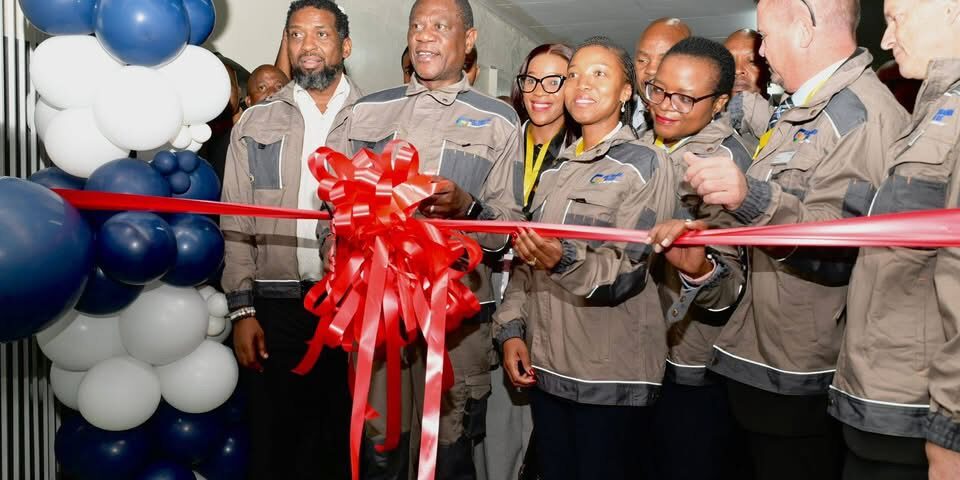
On Tuesday, Mpumalanga Premier Mandla Ndlovu and Deputy President Paul Mashatile inaugurated the Fourth Industrial Revolution (4IR) Digital Innovation Laboratory and Centre of Specialisation at Gert Sibande TVET College in Standerton.
The new facility includes an Artificial Intelligence (AI) laboratory and a specialised millwright training workshop aimed at equipping students with advanced technical and digital skills required in a rapidly changing global economy.
Delivering the welcome address, Ndlovu described the launch as a historic milestone for Mpumalanga and a significant step in preparing young people for emerging careers in automation, robotics and advanced manufacturing.
“We are gathered here to launch a centre that equips our young people not only to dream, but also to build, innovate and lead in the Fourth Industrial Revolution,” said the premier.
He said the initiative forms part of the province’s broader strategy to tackle inequality through education, technology and skills development.
The premier highlighted progress made in digital learning across the province, revealing that 60,000 smart devices were distributed to Grade 12 learners in 2025. A further 70,000 tablets are being rolled out to Grade 10 learners this year, alongside efforts to improve internet connectivity in schools.
Ndlovu also emphasised Mpumalanga’s commitment to inclusive education, noting the development of boarding schools in the district and plans to establish a school for the deaf.
Speaking at the event, Mashatile said the establishment of the innovation laboratory represents an important step towards building a skilled and competitive South Africa.
“The Fourth Industrial Revolution Digital Innovation Lab and Centre of Specialisation will connect education with industry and empower young people with forward-looking skills,” he said.
Mashatile noted that artificial intelligence is transforming how societies work and warned that unequal access to technology could deepen existing social and economic divides if not addressed.
Citing the World Economic Forum’s Future of Jobs Report 2025, he said technological change could displace about 92 million jobs globally by 2030 but create around 170 million new roles, resulting in a net gain of 78 million jobs.
However, he cautioned that countries such as South Africa must ensure workers gain new skills to adapt to technological change.
Government is currently developing a Draft National Artificial Intelligence Policy, released for public comment in April 2026, which aims to guide the integration of AI across sectors such as manufacturing, energy, infrastructure and trade.
The new lab at the college will also help integrate 4IR technologies into artisan training, enabling graduates to enter the labour market with industry-relevant skills.
The initiative was developed in partnership with industry stakeholders, including Sasol and technology partners, highlighting growing collaboration between government, education institutions and the private sector.
Addressing students, Mashatile encouraged them to use the facility to experiment, innovate and shape the country’s technological future.
“You are not just preparing for the future; you are being called to shape it,” he said.
The launch positions the college as a potential hub for digital innovation and skills development in Mpumalanga, with leaders hoping it will contribute to economic growth, job creation and inclusive technological advancement.