Brothers Extradited Over AKA and Tibz Murder Case
November 11, 2025
Elderly Man Arrested for Unlicensed Firearm Possession
November 11, 2025Tonga Roadshow Mobilises Community to Defeat Malaria
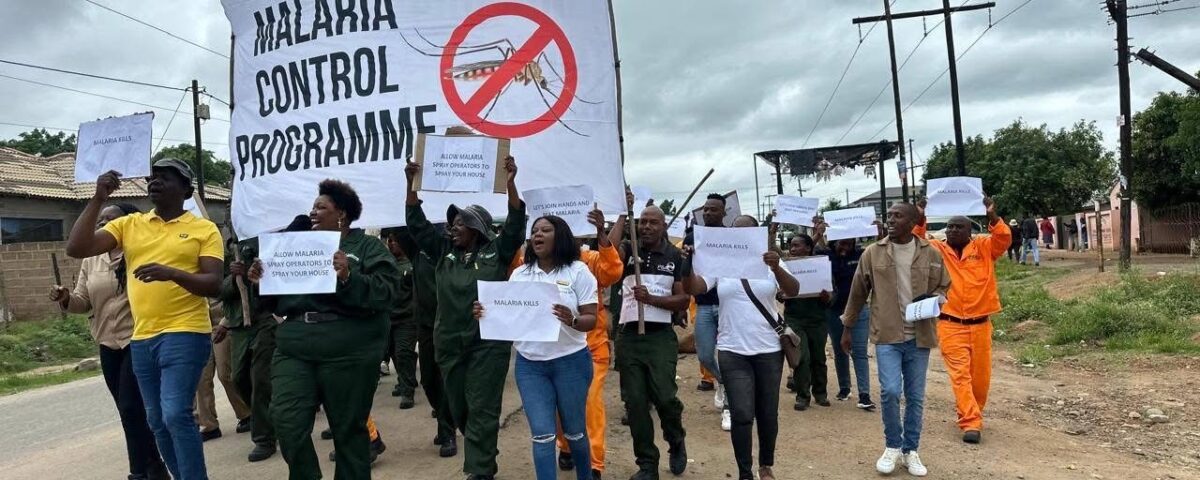
Tonga Roadshow Mobilises Community to Defeat Malaria
The Mpumalanga Department of Health marked SADC Malaria Day with an awareness roadshow in Tonga, Nkomazi Sub-District, on 7 November 2025. The initiative aimed to educate residents about malaria prevention and control, particularly in high-risk border areas.
The event brought together malaria control staff, environmental health practitioners, surveillance and vector-control teams, spray operators, and partners from the Lubombo Spatial Development Initiative 2 (LSDI2). The march began at Tonga Hospital and proceeded to Tonga Mall, where participants carried placards with malaria awareness messages and handed out educational pamphlets to members of the public.
Health officials continue to stress the importance of early testing, prompt treatment, and cooperation with indoor residual spraying campaigns to reduce malaria transmission. With summer approaching, communities are urged to remain vigilant and take precautions against mosquito bites.
Malaria remains prevalent in the Lowveld, particularly in Ehlanzeni District, including municipalities such as Nkomazi and Bushbuckridge, where transmission is most intense. Uncommon symptoms can include dark or bloody urine, jaundice, abnormal bleeding, impaired consciousness, or difficulty breathing—all signs of severe malaria requiring urgent medical attention.
Residents are advised to prevent malaria by using insect repellent, sleeping under treated nets, wearing long sleeves and trousers at dusk, closing windows at night, and supporting spraying campaigns. Early diagnosis and treatment save lives, and vigilance remains essential, especially in border and low-lying areas.