
Financial Accountability Protects NPOs from Financial Crimes
March 7, 2025
Cabinet Deadlock Delays 2025 Budget Speech
March 10, 2025Spaza Shop Deadline Leaves Many Struggling
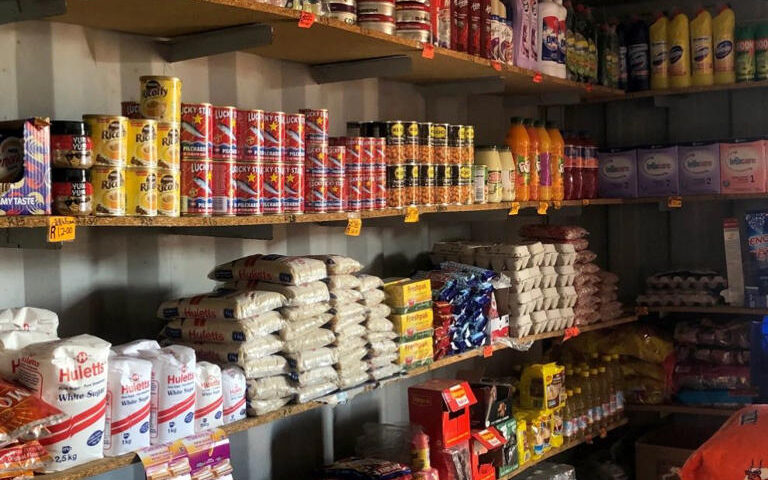
Spaza Shop Deadline Sparks Compliance Challenges
Friday, 28 February 2025, marked the final spaza shop registration deadline for all informal traders. With the deadline now passed, Gauteng MEC for Finance and Economic Development, Lebogang Maile, confirmed that all non-compliant traders would be shut down without exception. However, immigrant shop owners—who make up the majority of informal traders in South Africa—claim the Department of Home Affairs (DHA) failed to issue necessary asylum-seeker documents, reports GroundUp.
The registration requirement was introduced last year following the tragic deaths of 24 children from consuming expired or contaminated food. The crisis was so severe that President Cyril Ramaphosa addressed the nation. Initially, a 21-day deadline was set but later extended. However, Nelson Mandela Bay Mayoral Committee Member for Public Health, Thsonono Buyeye, described the compliance response as “extremely disappointing.”
In the Eastern Cape, of the 1,637 spaza shops, only 293 (17%) successfully submitted complete applications before the deadline. 843 applications (73%) were incomplete and therefore invalid. Despite being informed of their application deficiencies, many failed to make the necessary corrections. Buyeye stated that the department made extensive efforts to raise awareness and assist traders with compliance, yet 90% of spaza shops in Nelson Mandela Bay are run by immigrants who faced challenges in meeting the requirements.
However, Chris Mapingure of the Zimbabwe Migrants Support Network tells a different story. He claims that many immigrant traders missed the deadline due to delays in obtaining documents from Home Affairs, particularly asylum-seeker permits that were not renewed on time.
Registration required compliance with legal and health regulations, including immigration verification, food safety checks, pest control measures, fire safety certification, and zoning approvals. Thousands of inspections were conducted to ensure adherence to these standards, alongside training for food handlers. A business license processing fee was also mandatory.
Despite these requirements, the South African Spaza-Shops Association argues that limited access to formal financial systems made it difficult for traders to pay fees. Additionally, some landlords refused to provide title deeds because their properties were not zoned for business operations.
In response to the missed deadline, the association is urging the government to introduce a phased registration process. They propose an initial focus on health and food safety compliance, followed by later checks on immigration status, land zoning, and business licenses to allow traders more time to meet all the requirements.