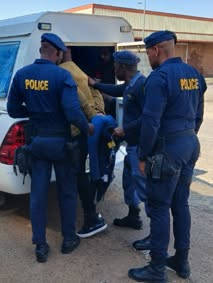
Mpumalanga Man Sentenced for Brutal Murder of Girlfriend
November 29, 2024
Sassa CEO Suspended Amid Investigation
December 4, 2024Urgent Gaps in Special Needs Education in Mpumalanga

Mpumalanga is grappling with significant shortcomings in its special needs education system, particularly for learners with moderate intellectual disabilities (MID) and those with physical disabilities. These challenges highlight broader systemic issues in South Africa’s approach to inclusive education.
No Primary Schools for MID Learners
Rianda Vosloo, an occupational therapist at Estralita School for Special Educational Needs in Lydenburg, expressed concern over the absence of primary schools dedicated to learners with MID in the province. The five existing schools cater only to high school-aged learners, from 14 to 21. Vosloo stressed that inclusive education in mainstream schools often fails to address these learners’ needs due to a lack of specialized staff like therapists and psychologists.
“Learners would get much better education and support in dedicated special schools or separate special education classes,” Vosloo said, emphasizing that inclusive education policies, though well-intentioned, are inadequately implemented.
Inclusive Education Policy Challenges
South Africa’s Inclusive Education Policy divides learners into three categories:
- High support needs – Special schools.
- Moderate support needs – Full-service schools.
- Low support needs – Ordinary public schools.
However, the implementation of this policy often leaves learners with MID inadequately supported, as full-service schools lack the necessary resources and expertise.
Boarding Facility Shortages
Estralita School, which serves learners with severe intellectual disabilities (SID), has the capacity to accommodate 220 students but only 160 boarders. Families in regions like Gert Sibande face significant challenges due to the absence of boarding facilities in their areas, forcing children to travel long distances or forgo education entirely.
At Masinakane Special Needs School, inadequate facilities have reached a crisis point. Since 2019, learners have lived in classrooms converted into makeshift hostels with no proper bathrooms or dining areas. Although temporary boarding facilities were introduced in 2022, they are now unsafe, and the school has faced fines for poor conditions.
Call for Government Action
The Democratic Alliance (DA) in Mpumalanga has called for urgent intervention to address these issues. Their recent motion in the provincial legislature emphasized the need for more specialized schools, properly equipped boarding facilities, and a dedicated task team to prioritize learners with special needs.
“Failing to address these gaps before the 2025 school year would leave vulnerable children exposed to societal risks while their parents are at work,” said DA education spokesperson Annerie Weber.
Broader National Failures
Mpumalanga’s struggles mirror national challenges. Reports by Human Rights Watch and the Centre for Child Law (CCL) reveal that over 500,000 children with disabilities remain out of school in South Africa. Those in schools often face discrimination, substandard education, and insufficient accommodations.
A Way Forward
Vosloo and other experts urge the Department of Basic Education to prioritize infrastructure and resources, such as schools for primary-level MID learners and facilities for children with physical disabilities. Vosloo suggested that at least one school per district be established for learners requiring mobility aids.
With the number of special needs schools in South Africa growing from 295 in 2002 to 499 in 2023, there is hope for progress. However, without immediate intervention in Mpumalanga, thousands of learners will continue to be left behind.